



Mythical Tale of the Call of Duty: One of the most popular legends of Vaishno Devi involves her encounter with a tantric devotee named Bhairon Nath. It is said that Bhairon Nath was bewitched by Vaishnavi’s beauty and chased her with ill intentions. To escape him, Mata Vaishno Devi fled to the Trikuta hills. During this pursuit, she spent 9 months meditating inside a cave at Adhkuwari (halfway on the mountain) – a cave now known as Garbh Joon because of its womb-like shape:contentReference[oaicite:8]{index=8}:contentReference[oaicite:9]{index=9}. According to the legend, Vaishnavi asked Lord Hanuman to stand guard outside this cave to prevent Bhairon Nath from entering:contentReference[oaicite:10]{index=10}. After emerging from the cave, the Goddess finally confronted Bhairon Nath near the holy cave shrine. Manifesting as the fierce Goddess Durga, she beheaded Bhairon Nath with her sword:contentReference[oaicite:11]{index=11}. Bhairon Nath’s severed head fell on a nearby hilltop, where today the Bhairav (Bhairon) Temple stands:contentReference[oaicite:12]{index=12}. It is believed that in his final moments, the chastened Bhairon Nath begged Mata for forgiveness. The kind Mother Goddess not only forgave him but granted him a boon: She decreed that pilgrims must visit Bhairon’s temple after visiting her cave shrine, for their journey to be complete. This is why devotees typically conclude the Vaishno Devi yatra with a visit to Bhairav Nath’s temple, about 1.5 km above the main Bhawan:contentReference[oaicite:13]{index=13}.
The Story of Pandit Shridhar and the Discovery of the Shrine: The modern discovery of Vaishno Devi’s holy cave is attributed to a devout Brahmin named Pandit Shridhar about 700 years ago:contentReference[oaicite:14]{index=14}. As per the folklore, Mata Vaishnavi (in disguise as a young girl) had once helped Pandit Shridhar host a bhandaara (community feast) at his home. During the feast, Bhairon Nath (who was present) recognized the divine powers of the girl and attempted to grab her, causing her to vanish. Distraught at the sudden disappearance of the girl and the failure of the feast, Pandit Shridhar began to fast and pray fervently for her return:contentReference[oaicite:15]{index=15}. Pleased with his devotion, Vaishno Devi appeared to Shridhar in a dream and guided him to seek her at a cave in the Trikuta Mountains:contentReference[oaicite:16]{index=16}. Following the divine instructions, Shridhar trekked up the hill and, with some difficulty, located the hidden Holy Cave. When he ventured inside, he beheld the Goddess in all her glory and found the three sacred Pindis – natural rock formations representing the three forms of the Divine Mother (Maha Kali, Maha Lakshmi, and Maha Saraswati):contentReference[oaicite:17]{index=17}. Mata Rani blessed Pandit Shridhar, giving him the boon of four sons and the honor of being the first priest of her shrine:contentReference[oaicite:18]{index=18}. He spent the rest of his life in service of the Goddess at the cave, spreading Her glory. This legend underlines the humble origins of the shrine – from a hidden cave discovered by a sincere devotee to the grand temple complex it is today.
Historical Significance: While the legends reinforce the divine antiquity of Vaishno Devi, there are also references in Hindu epics and history that add to the shrine’s significance. The epic Mahabharata contains an account that just before the great war of Kurukshetra, the warrior prince Arjuna prayed to Goddess Durga for blessings. It is believed that Durga appeared to him as Vaishno Devi on the slopes of “Jambhu” (ancient name for Jammu), indicating the deity’s presence in this region since mythical times:contentReference[oaicite:19]{index=19}. Many believe that the five rock formations overlooking the Holy Cave are symbols of the five Pandava brothers, suggesting that the Pandavas themselves may have paid homage to the Devi and possibly built the earliest shrines here during their exile:contentReference[oaicite:20]{index=20}:contentReference[oaicite:21]{index=21}. In terms of recorded history, the Vaishno Devi pilgrimage remained relatively lesser-known outside the local region until the last few centuries. By some accounts, the hill shrine was in existence by the early 19th century under the patronage of the Dogra rulers of Jammu. It came under modern management when the Shri Mata Vaishno Devi Shrine Board (SMVDSB) was established in 1986 as a statutory board to take over the administration from the erstwhile Dharmarth Trust of the Jammu royals:contentReference[oaicite:22]{index=22}. Since then, the Shrine Board – constituted by members nominated by the J&K Government and chaired by the Governor of Jammu & Kashmir:contentReference[oaicite:23]{index=23} – has transformed the pilgrimage infrastructure, making the yatra more accessible, safe, and organized for the millions of devotees who visit each year.
Spiritual Significance of the Holy Cave Shrine
Upon reaching the pinnacle of the yatra – the Bhawan (main temple complex) – devotees enter the sacred cave where Mata Vaishno Devi revealed herself to Pandit Shridhar. Inside this cave temple, there are no man-made idols. Instead, pilgrims worship the Goddess in the form of the Three Pindis, which are natural rock formations symbolizing the three primary aspects of the Divine Mother: Maha Kali (representing strength and the power to destroy evil), Maha Lakshmi (representing wealth, prosperity and the power of sustenance), and Maha Saraswati (representing wisdom and the power of creation):contentReference[oaicite:24]{index=24}. These three together are Vaishno Devi – the Mother who encompasses all powers. The sight of the pindis in the dimly lit cave, constantly abuzz with the chants of “Jai Mata Di”, is often described by devotees as a profoundly moving experience, instilling a sense of divine presence and grace.
The cave where the pindis reside is itself considered miraculous. It is believed to be eternally sanctified by an underground stream of holy water called the Charan Ganga that flows over the Goddess’s holy feet and then out of the cave. Pilgrims often collect this water as prasad (holy offering). Interestingly, there is an **old traditional cave tunnel** at the Bhawan as well – the original path through which pilgrims had to crawl to have darshan of the pindis. This narrow cave path (about 98 feet long) is said to have been used for centuries. However, due to the massive increase in pilgrimage traffic, the old cave route is now usually kept closed except during lean seasons (it is typically opened during the winter months of January and February when pilgrim rush is minimal):contentReference[oaicite:25]{index=25}. For most of the year, devotees access the sanctum via a new entrance and exit tunnel constructed to accommodate the flow safely. Experiencing the old cave, when open, is considered an added blessing – as it involves wading through cold holy water and squeezing through the very passage Mata Vaishnavi once created.
Mata Vaishno Devi’s shrine is universally regarded as a site of great spiritual energy (shakti). It is counted among the major Shakti Peeths – places where the energy of the Goddess is believed to be concentrated. Many devotees recount personal experiences of miracles or a sense of the Mother’s guiding hand protecting them during the difficult trek. The pilgrimage is often undertaken as a vow or mannat – people pray at Vaishno Devi for fulfillment of wishes, and upon grant of the wish, they return to pay homage (for example, many devotees tie a thread at the temple and untie it when their wish is fulfilled). The atmosphere throughout the journey is charged with devotion: you will hear constant cries of “Jai Mata Di” (Hail the Mother Goddess) and “Jor Se Bolo” (Say it loudly!) encouraging fellow pilgrims, devotional songs (bhajans) playing on loudspeakers, and the profound camaraderie of devotees assisting each other on the way. It is this intense devotion and collective faith that make the Vaishno Devi yatra a uniquely uplifting experience that transcends the physical challenges of the trek.
Another remarkable aspect of Vaishno Devi is its inclusive sanctity. The temple is sacred to Hindus of all denominations and even Sikhs revere it – it is said that Guru Gobind Singh (10th Sikh Guru) meditated in the cave of Vaishno Devi. Many noted saints and spiritual leaders, from Swami Vivekananda to contemporary gurus, have undertaken the yatra to seek Mata Rani’s blessings:contentReference[oaicite:26]{index=26}. The shrine’s fame and the Goddess’s benevolence are such that devotees firmly believe that unless Mata calls you, you cannot come; but once She does, no obstacle will prevent you from reaching Her. This unshakable belief – “Mata Rani ka bulawa” (the Mother’s call) – is at the heart of the pilgrimage’s spiritual significance.
How to Reach Vaishno Devi – Getting to Katra
The journey to Vaishno Devi essentially begins at Katra, a small town at the foot of Trikuta Mountains in Jammu & Kashmir. Katra serves as the base camp for the yatra. Here’s how one can reach Katra from various parts of India:
- By Air: The nearest airport is Jammu Airport (Satwari Airport), about 50 km from Katra. Jammu has daily flights from major cities like Delhi, Mumbai, Bengaluru, Chennai, Hyderabad, etc. From Jammu Airport, you can hire a taxi or take a bus to Katra (roughly a 2-hour drive):contentReference[oaicite:27]{index=27}. There are prepaid taxi counters and frequent J&K Road Transport buses available. It’s worth noting that there is a helipad at Katra for helicopter services to Sanjichhat (near the shrine), but for arriving in the region via commercial flights, Jammu is the gateway.
- By Train: Katra has its own railway station now – Shri Mata Vaishno Devi Katra Railway Station – which is well-connected to many Indian cities. There are direct trains to Katra from Delhi (like the Vande Bharat Express and other mail trains) and other locations. Alternatively, you can take a train to Jammu Tawi (a major railhead ~50 km from Katra) and then travel by road. The train route from Jammu to Katra passes through scenic hills and multiple tunnels and bridges. Notably, the Udhampur–Katra rail link completed in recent years made it possible for pilgrims to reach Katra directly by train:contentReference[oaicite:28]{index=28}. From Jammu Tawi or Udhampur station, shared taxis and buses are readily available for the approximately 1.5–2 hour journey to Katra.
- By Road: Katra is accessible by road via Jammu. A national highway connects Jammu to Katra (around 50 kilometers distance):contentReference[oaicite:29]{index=29}. Regular state transport buses, as well as private luxury buses, ply between Jammu and Katra, departing every 15–30 minutes:contentReference[oaicite:30]{index=30}. The road trip offers lovely views of the lower Himalayas, though it is a winding hilly road – travelers prone to motion sickness should be prepared. Direct buses to Katra are also available from Delhi and Punjab (especially during peak season, tour operators run deluxe buses). If you’re driving your own vehicle, you can drive straight to Katra via Jammu bypass (Domel route) without entering Jammu city:contentReference[oaicite:31]{index=31}. Parking facilities are available in Katra for private vehicles. Do note that there are security checkpoints en route for the safety of the region, so carry valid ID and cooperate with security formalities:contentReference[oaicite:32]{index=32}.
Once you reach Katra, the spiritual leg of the journey begins. Katra town itself has an elevation of about 750 meters and is a bustling pilgrim town full of hotels, dharamshalas (inns), restaurants, and shops selling dry fruits, souvenirs, and devotional items. The atmosphere is charged with devotion – you will see pilgrims preparing for the trek, many tying the traditional mauli (red sacred thread) on their foreheads or wrists, and hear the greeting of “Jai Mata Di” echoing everywhere. It’s advisable to rest in Katra for a bit (especially if you had a long journey) and start the trek fresh, either early in the morning or in the evening, depending on your plan.
Yatra Registration and Entry Slip (Parchi)
Before starting the trek from Katra, every pilgrim must register for the yatra and obtain a Yatra Slip (Parchi). This is a compulsory step instituted by the Shrine Board for security and logistical reasons. The registration is free of cost. In Katra, the main Yatra Registration Counter (YRC) is located near the bus stand (at Banganga check post area). You need to show a valid photo ID to register, and you will be issued a QR-coded slip or an RFID-based Yatra Access Card that records your journey:contentReference[oaicite:33]{index=33}. The slip is stamped with the date and time of issue and is **valid for only 6 hours** from the time of issue:contentReference[oaicite:34]{index=34}. This means you must start your trek and cross the first checkpoint (Banganga) within 6 hours of getting the slip, or it expires. This system helps manage the flow of pilgrims and prevents overcrowding on the track at any given time.
To avoid waiting in lines at Katra, you also have the option of registering online. The Shri Mata Vaishno Devi Shrine Board’s official website provides an online Yatra Registration service:contentReference[oaicite:35]{index=35}. Devotees can create an account, select the date of yatra, and print their travel slip at home. Upon reaching Katra, the printed slip or digital confirmation can be exchanged for the RFID card. There are also automated kiosks in Katra for scanning the online receipt and getting the RFID card. Going digital not only saves time but also ensures you have a confirmed slot for the yatra date of your choice, especially during peak seasons when on-the-spot registration counters might see long queues.
After obtaining the yatra slip, you can proceed to the starting point of the trek. At the Banganga entry gate (the first checkpoint about 1.5 km from the registration counter), security personnel will check your slip/card. The RFID system will log your entry. **Important:** Each pilgrim must carry their own slip/card and it’s non-transferable. Keep this card safe with you throughout the journey – you will need to show it at multiple checkpoints (for example, at Sanjichhat and finally at Bhawan) to record that you have completed the journey. This helps the Shrine Board keep count of pilgrims on the track at any time (for safety and emergency response) and also ensures that only genuine registered devotees access the shrine area.
In summary, do not skip the registration. Not only is it mandatory, but it is also for your own convenience and safety. With registration done, you are all set to begin the sacred climb towards Mata’s abode!
The Pilgrimage Route – Trekking to the Holy Cave
The traditional Vaishno Devi pilgrimage involves a trek from Katra to Bhawan (the main shrine complex). This trek is about 13 kilometers long on a well-defined uphill pathway:contentReference[oaicite:36]{index=36}. Along the way are several important landmarks, resting points, and facilities. Let’s walk through the yatra route step by step, highlighting what to expect:
Starting Point: Banganga
About 1.2 kilometers from the Katra bus stand is the Banganga checkpost, which is effectively the starting gate of the trek. Here, you will pass through a security check and show your yatra slip/RFID card. Banganga holds religious significance as well. According to legend, when Mata Vaishnavi was heading up the mountain, her companion (Hanuman in the form of a langoor/monkey) felt thirsty. The Goddess shot an arrow (baan) into the ground and a spring of water gushed out – forming a rivulet now known as Ban Ganga (literally, “Arrow Ganga”):contentReference[oaicite:37]{index=37}. Devotees believe this water is holy, and many pilgrims stop here to take a quick dip or sprinkle the water on themselves as a purifying ritual before proceeding. On site, you will see the Ban Ganga temple and two bathing ghats (steps leading into the stream) where people can bathe. The water is cool and refreshing – a blessing for weary travelers.
Another tale links Ban Ganga to Mata washing her hair (hence sometimes it’s also called Bal Ganga, as bal means hair):contentReference[oaicite:38]{index=38}. Regardless of the story, the spot is considered the first darshan of the journey, often marked by pilgrims offering their prayers at the small temples there. After passing Banganga, the ascent truly begins.
Charan Paduka – Footprints of the Mother
About 1.5 kilometers uphill from Ban Ganga (roughly 3 km from Katra) is the next major stop: Charan Paduka. “Charan Paduka” means “Footprints”. It is a small temple housing what are believed to be the imprints of Mata Vaishno Devi’s holy feet on a rock:contentReference[oaicite:39]{index=39}. The legend goes that Mata Vaishnavi paused here while fleeing from Bhairon Nath, and the mark of her feet was left on the stone she stood upon. Devotees stop at this shrine to pay respects, as it feels like literally receiving the Goddess’s charan sparsh (touch of her feet) – an auspicious moment. The site is at an altitude of ~3,380 feet:contentReference[oaicite:40]{index=40}. Many offer prayers and then continue the journey with renewed energy. Facilities at Charan Paduka include a refreshment stall and clean drinking water, as well as a first aid post.
Adhkuwari (Ardh Kuwari) – The Eternal Virgin’s Meditation Cave
Approximately 6 km from Ban Ganga (halfway to Bhawan) lies Adhkuwari, often called Ardh Kuwari (meaning “Eternal Virgin” or “Halfway point”). This is a very significant stop both logistically and spiritually. Many pilgrims choose to take a longer rest here or even an overnight break (there are accommodations nearby) because you’ve covered roughly half the climb. At Adhkuwari, the altitude is about 4,600 feet:contentReference[oaicite:41]{index=41}.
Adhkuwari’s importance comes from the legend mentioned earlier: this is the place where Mata Vaishno Devi meditated in a cave for nine months while hiding from Bhairon Nath:contentReference[oaicite:42]{index=42}. The cave, known as Garbha Joon (womb cave), is about 15 feet long. It is so narrow that one must crawl through it on hands and knees to pass from one end to the other:contentReference[oaicite:43]{index=43}! Pilgrims consider it highly auspicious to traverse this cave, symbolically experiencing Mata’s nine-month penance. However, due to its narrow size, only one person at a time can go through, and a natural rock at the center forces you to bend low. This causes a bottleneck; hence there is usually a long wait to enter Garbh Joon, and entry is regulated via a token system. Devotees often wait for an hour or more for their turn (especially during peak season, the wait can be several hours). If you have time and physical ability, it’s worth doing for the spiritual fulfillment. Many report feeling an inexplicable divine energy inside the cave. If you’re unable to or don’t wish to crawl through, you can also directly visit the Adhkuwari temple above the cave and offer prayers. The name “Ardh Kuwari” itself is a reminder of Vaishnavi’s virgin form and her 9-month tapasya (penance) here – akin to a baby growing in a womb:contentReference[oaicite:44]{index=44}.
Facilities at Adhkuwari are well-developed. The Shrine Board manages a large resting complex here called Ardh Kuwari Bhawan with dormitories and rooms (which you must pre-book, more on accommodation later). There are eateries (including a popular Bhawan-specific outlet of Sagar Ratna and other vegetarian restaurants), shops, toilets, and medical facilities. It’s common for pilgrims who start their trek late in the day to halt at Adhkuwari for the night and resume early next morning.
Himkoti and the New Battery Car Track
Beyond Adhkuwari, the traditional old footpath continues via Sanjichhat to Bhawan. However, the Shrine Board has also developed an alternate new route from Adhkuwari that is flatter and broader – often referred to as the Himkoti route. If you take the new track, one of the notable points en route is Himkoti, a scenic viewpoint around 2.5 km from Adhkuwari:contentReference[oaicite:45]{index=45}. Unlike other stops, Himkoti is not a temple or shrine; it’s a designated refreshment point and view-point. Here, one can relax and admire panoramic views of the valley and the distant plains. The cool breeze and open vistas at Himkoti provide a pleasant respite, especially if you’re trekking during daytime. Many pilgrims take a short break here to recharge.
Importantly, the Himkoti route is where Battery Car services operate. The Shrine Board runs electric battery-operated vehicles (like large golf carts) for pilgrims who wish to avoid walking part of the route. These battery cars currently run between Ardh Kuwari and Himkoti (and up to a point near Bhawan) on the new track. Tickets for battery car rides are limited and can be booked at Adhkuwari (or in advance through the official website). The service is especially useful for the elderly or those with walking difficulties, as it can reduce the distance on foot by a few kilometers. However, note that demand is high and priority is often given to senior citizens and differently-abled persons. Even with battery cars, one would still have to walk some final stretch to reach Bhawan, as the vehicles have designated stop points.
Sanjichhat – Nearing the Summit
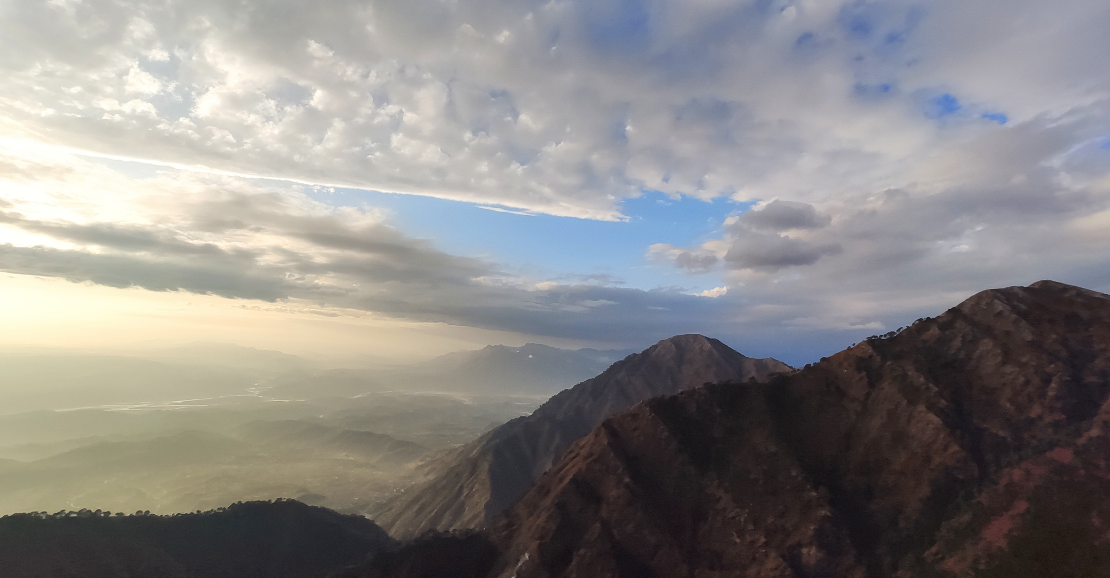
Whether you take the traditional route or the new route, they eventually converge at Sanjichhat – the highest point of the trek. Sanjichhat is roughly 3.5 km from Adhkuwari via the old path, and sits at an altitude of about 6,200 feet. When you reach Sanjichhat, you’ve essentially completed the hardest part of the climb. The terrain flattens out here. Sanjichhat offers the first direct view of the Bhawan complex and often a magnificent bird’s-eye view of the mountains around (on clear days, you might even catch a glimpse of the snow-clad peaks of the Pir Panjal range). The word “Sanjichhat” in the local language signifies a broad flat area on the mountain – indeed, it’s a sort of mountain saddle.
At Sanjichhat, there is a helipad – this is where the helicopter service from Katra lands (more on the helicopter option later). There are also accommodations (managed by the Shrine Board), a small temple, and basic services like food stalls and toilets. Pilgrims usually pause here to catch their breath, enjoy the cool air (especially refreshing if you’ve trekked in warm weather), and perhaps send a quick prayer of thanks for having made it this far. From this point, Bhawan is only about 2.5 km away and the path is mostly level or gently sloping downhill.
Bhawan – The Holy Cave Shrine of Mata Vaishno Devi
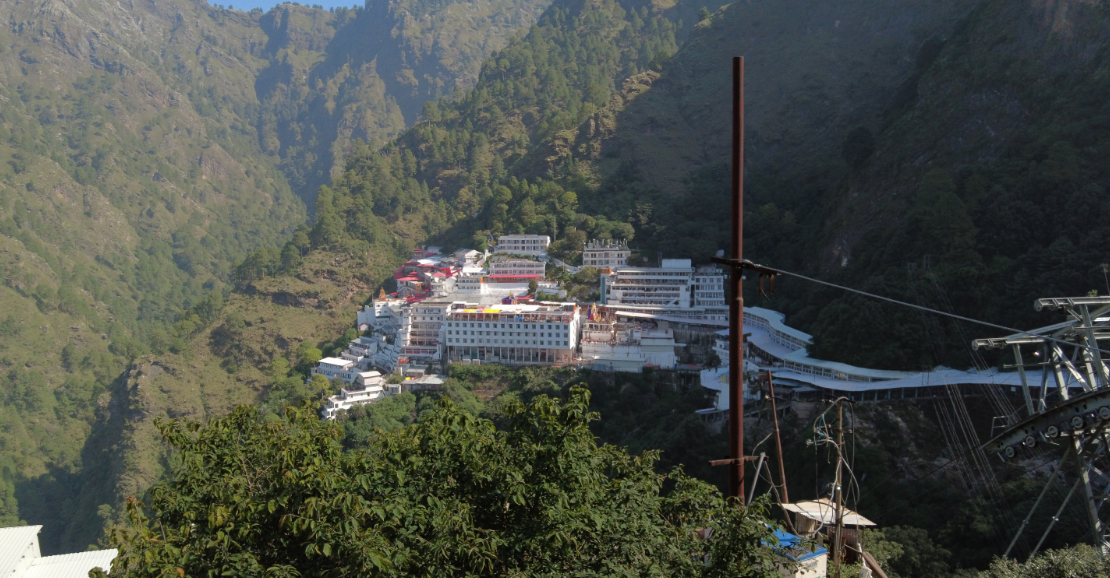
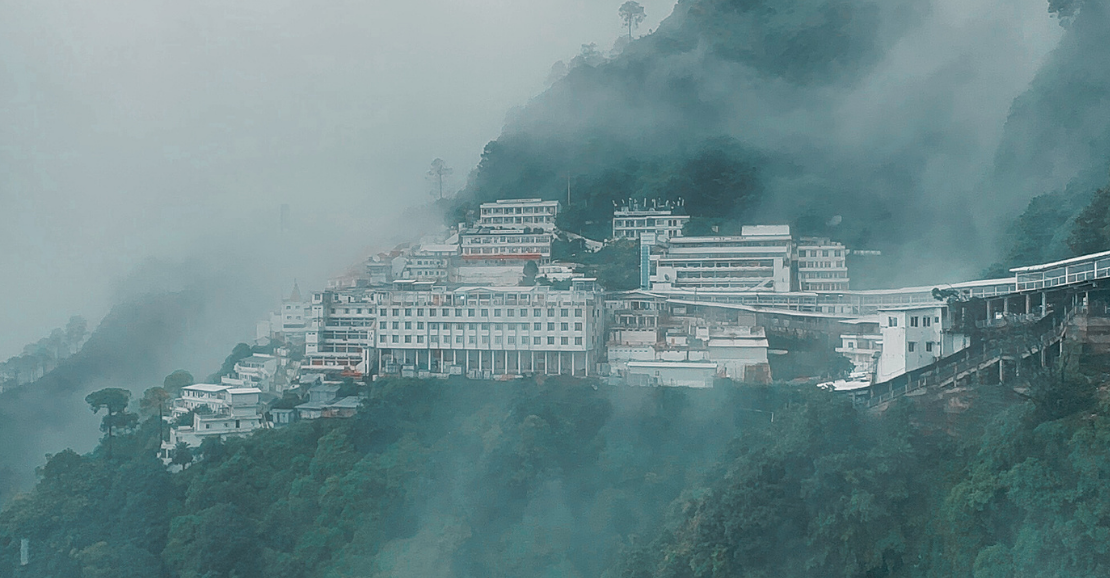
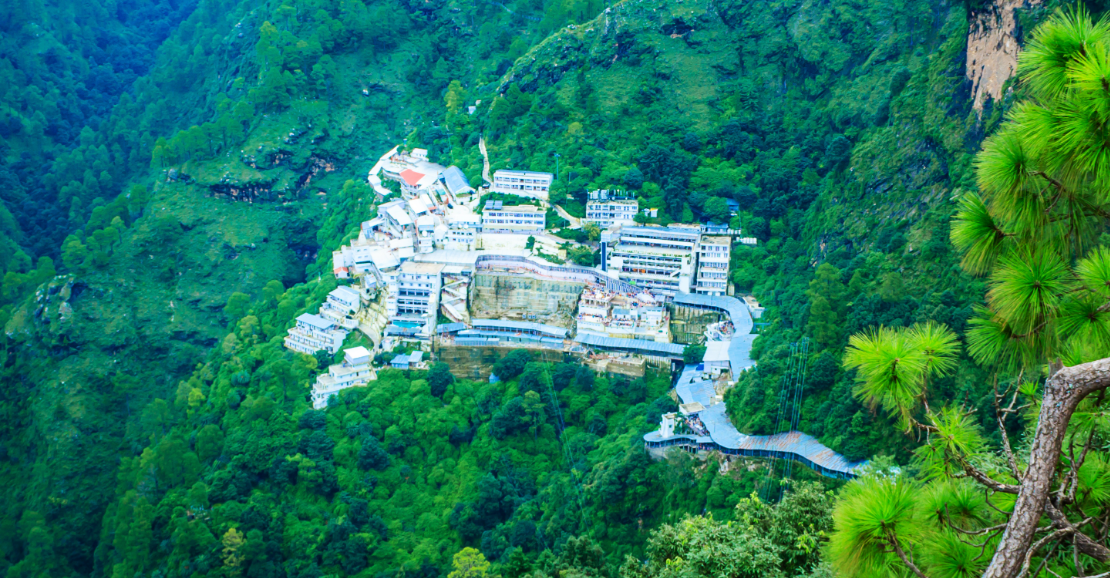
Finally, after hours of trekking and unwavering determination, you reach the sacred Bhawan. “Bhawan” refers to the entire temple complex at the cave site of Mata Vaishno Devi. As you approach, you will likely first notice the white marble-like buildings clinging to the cliff side, bright lights, and the bustling energy of devotees who have arrived. The very atmosphere around Bhawan is charged with excitement, devotion, and relief – pilgrims often raise slogans of “Jai Mata Di” louder as they catch sight of the shrine, tears of joy and gratitude are not uncommon, and there’s a general sense of spiritual accomplishment.
Before proceeding to the cave for Darshan (viewing the Goddess), there are a few things to take care of at Bhawan:
- Cloak Rooms: Just like many major temples, you are not allowed to carry bags, belts, mobile phones, cameras, or any leather items inside the cave. So, you should deposit your belongings in the free cloak rooms at Bhawan:contentReference[oaicite:47]{index=47}. The Shrine Board provides secure locker facilities where you can safely keep your items (you’ll get a key or token for your locker). Retain only necessary cash and your offerings for the Goddess (if any) in hand.
- Bathing Ghats: Many devotees choose to freshen up before darshan. There are separate bathing areas for men and women at Bhawan fed by cold mountain spring water (considered holy). Washing one’s face or even taking a quick bath can be invigorating after the long journey, and it’s seen as a ritual purification before entering the sanctum.
- Prasad and Offerings: If you wish to make an offering to Mata, you can purchase a Prasad packet from the official Shrine Board counters at Bhawan. These typically include coconut, dried fruits, a chunri (red veil), etc., neatly packed and blessed. It’s recommended to buy official prasad to ensure purity and avoid plastic. You can carry small offerings like a coconut or flowers in hand; large offerings aren’t necessary – Mata accepts pure devotion above all.
- Entry Queue: Darshan is organized via queue complexes. Depending on the crowd, you may be directed to a waiting hall with numbered groups. The Shrine Board uses a token/group number system to manage the flow into the cave. There are announcements and electronic displays informing which token/group is allowed next. You might have to wait some time, especially during peak hours or seasons. The waiting halls are large and sheltered, with facilities like drinking water, toilets, and even blanket rentals if it’s cold. While waiting, pilgrims often sing bhajans or chant the Mother’s name. Security personnel and volunteers will guide the queues.
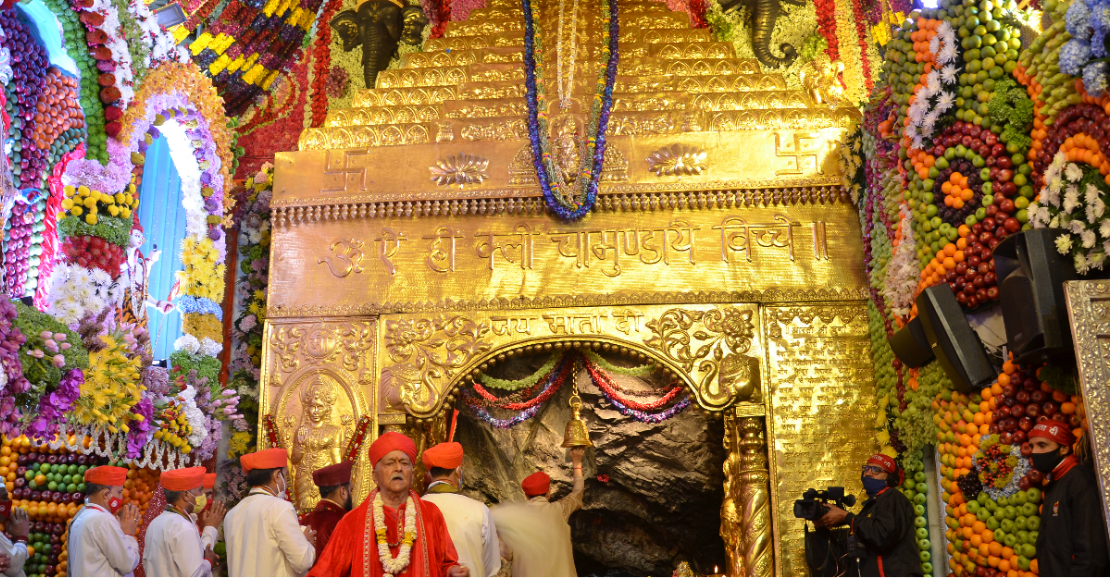
When your turn comes, you’ll pass through a metal detector and final security check, then proceed through the new tunnel leading into the sacred cave. The ambiance inside is dimly lit, and the passage can be a bit cool and moist due to the cave environment. As you move slowly forward (barefoot, as shoes/slippers must be removed), you’ll likely be chanting or hearing others chant “Jai Mata Di” in reverence. Finally, you come face to face with the **three Pindis** of Mata Vaishno Devi, guarded behind a pane of glass and attended by priests. This is the divine sight you have journeyed for: on a marble platform, three natural rock formations are adorned with red and yellow cloth and glittering ornaments, each correspondingly worshipped as Maa Kali (on the right, dark in color), Maa Lakshmi (in the center, with a yellowish hue), and Maa Saraswati (on the left, whitish in color):contentReference[oaicite:48]{index=48}. A continuous trickle of holy water flows near the base of the pindis – this is the Charan Ganga. The priests often briefly take the offerings from pilgrims and touch them to the holy Pindis before handing them back as prasad. They might also give a few sacred items like akhand jyot cloth or vibhuti (ash) as blessings.
The darshan moment is fleeting (especially when crowds are large, the line keeps moving steadily). You may get only a few seconds in front of the Goddess to bow your head, say your prayers, and absorb the sight into your heart. But those few seconds are filled with intense spiritual emotion for devotees – many forget their fatigue and feel a profound peace or energy inside the cave. After darshan, you continue out through the exit tunnel. Don’t forget to collect your belongings from the cloak room and maybe buy the sealed prasad boxes (offered by the Board) to take home for family and friends.
At this point, it is highly recommended to also partake in the “Bhairav Darshan” before declaring your yatra complete, which we cover next.
Bhairav Nath Temple – Completing the Yatra
As mentioned in the legend, the pilgrimage to Vaishno Devi is considered incomplete without visiting the temple of Baba Bhairav Nath. This temple is located on an adjacent hill, about 1.5 to 2 kilometers from Bhawan, at an even higher elevation (almost 6,600 feet). After finishing at Bhawan, pilgrims have to decide how to tackle this last but important part of the journey:
- Trek on Foot: A steep footpath leads from Bhawan to Bhairav Ghati where the temple stands. The climb is relatively short but quite steep, and after the long trek to Bhawan, it can be challenging especially for those who are very tired. However, many pilgrims still choose to walk, taking it slow and steady. The distance is roughly 1.5 km but being steep it can take 30-45 minutes or more depending on your pace.
- Ponies or Palkis: Ponies are available at Bhawan that can take you up to Bhairav Temple for a fee. Older devotees often hire a pony to avoid the strain. Palkis (carried by porters) are also an option if someone cannot sit on a pony. The rates for these are fixed per stretch (ensure to check the officially approved rates or at least haggle fairly, as prices can vary).
- Ropeway (Cable Car): A major convenience added recently is the Bhairav Baba Ropeway. The Shrine Board inaugurated a ropeway cable car system from near Bhawan to Bhairav Temple, which covers the distance in just about 5 minutes:contentReference[oaicite:49]{index=49}. This ropeway can carry around 40-45 people at a time and runs multiple trips between morning and evening (operational hours roughly 9 AM to 5 PM):contentReference[oaicite:50]{index=50}. Tickets are very nominal (approximately Rs.100 for a return trip):contentReference[oaicite:51]{index=51}. If you take the cable car up, the same ticket is valid for your return down as well – so keep it safe. The ropeway ride offers spectacular aerial views of the valley and the clustered buildings of Bhawan below, which is an exhilarating experience for many. Given its speed and comfort, the ropeway is highly recommended, especially if available at the time of your visit. However, remember that during peak rush, there might be waiting lines for the ropeway too, as capacity is limited to about 800 people per hour or so. The introduction of the ropeway has indeed made it much easier for devotees to include Bhairav Mandir in their itinerary without excessive strain:contentReference[oaicite:52]{index=52}:contentReference[oaicite:53]{index=53}.
Upon reaching the Bhairav Nath Temple, you will find a small shrine marking the spot where Bhairon Nath’s head fell. The idol of Bhairav here is worshipped, and devotees offer their prayers seeking completion of their pilgrimage. There is usually a priest distributing prasad (sacred ash or coconuts) and tying a kalava (sacred thread) to pilgrims, symbolizing Baba Bhairav’s blessings. Many pilgrims note that the view from Bhairav temple is one of the most beautiful – you can look down at the entire stretch from Bhawan to Katra on a clear day, and it gives a moment of reflection on how far you’ve come with Mata’s grace.
With the darshan of Bhairav Ji, you have now spiritually completed the Vaishno Devi Yatra. Devotees often express a feeling of contentment and divine bliss at this point. Don’t forget to retrieve any luggage if you left it at Bhawan in cloak rooms or resting areas. You can then begin your return journey down to Katra by the same paths (or take the helicopter back if you had booked one for return). The return is mostly downhill, which is easier on the lungs but can be tough on the knees – so walk carefully. Many plan the return to be during nighttime or early morning if they went up in the evening, since the entire trek path is well-lit and active 24/7. At the end of your return trek, you will again pass Banganga and exit. The RFID card is automatically recorded at the final checkpoint to mark your journey’s completion.
Facilities and Services for Pilgrims
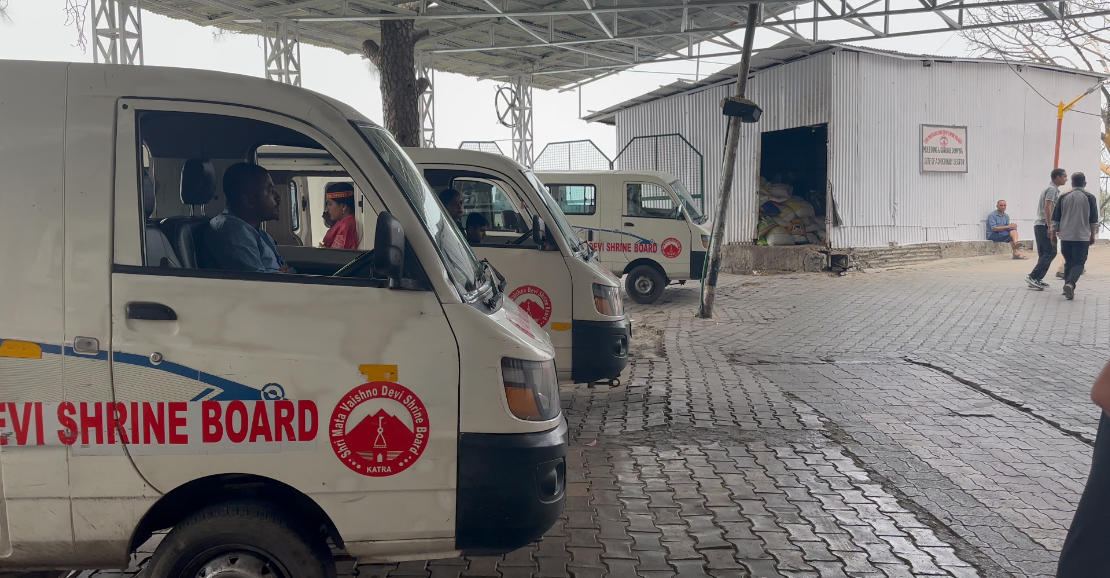
The Shri Mata Vaishno Devi Shrine Board (SMVDSB) has put in place extensive facilities to support pilgrims throughout their journey. Here are some of the key amenities and services available:
Accommodation Options
The Shrine Board provides affordable and clean accommodation at multiple points:
- Katra: There are several Shrine Board guest houses in Katra such as Shakti Bhawan, Niharika Complex, Ashirwad Bhawan, etc. These offer budget rooms and dormitories which can be booked online. Besides these, Katra town is full of private hotels ranging from budget lodges to 3-star comfort. It’s usually easy to find a room except during festive rush when advance booking is advisable.
- Adhkuwari: As mentioned, at Adhkuwari the Board operates a few accommodation units (primarily dormitories and some rooms) for pilgrims who want to stay mid-yatra:contentReference[oaicite:54]{index=54}. These are limited and high in demand. There are no private hotels at Adhkuwari (all lodging is through the Board):contentReference[oaicite:55]{index=55}. Booking has to be done online, typically up to 60 days in advance for a confirmed spot:contentReference[oaicite:56]{index=56}.
- Sanjichhat: A small guest house is available at Sanjichhat (near helipad) run by the Board. It’s often used by those who might have taken a helicopter up late or got stuck due to weather, etc., or by officials. Not a common choice for most pilgrims to halt here, but it exists.
- Bhawan: Yes, you can actually stay overnight at Bhawan as well! The Shrine Board has accommodation at Bhawan in the form of dormitories (free resting sheds with blankets available) and some rooms:contentReference[oaicite:57]{index=57}. Similar to Adhkuwari, no private establishments are at Bhawan, so you must book the Board’s rooms in advance (again, the online system opens booking ~60 days prior and they fill up quickly). Staying at Bhawan can be a blissful experience – waking up at the abode of the Goddess – but keep in mind temperatures up there are colder, and rooms are basic yet comfortable. Many pilgrims prefer to descend back to Katra after darshan on the same day, but if one is tired or wants to attend the early morning Aarti, staying at Bhawan is a good option.
- Battery-operated vehicles for elderly/disabled: In addition to lodging, the Board provides special services like free Pitthu (porter) or attendants for disabled pilgrims and has priority accommodations for them. There are ramps and even a few wheelchairs at certain stretches, demonstrating efforts to make the shrine accessible.
All Shrine Board accommodations are nominally priced and well-maintained, but again, due to heavy demand, plan and book in advance. If you don’t get a booking, don’t worry – Katra’s hotels or Dharamshalas (often run by charitable trusts from various cities) are plentiful. On the route, aside from Adhkuwari and Bhawan, you won’t find private accommodations, but you will find covered rest areas and benches to take breaks.
Food and Refreshments
Vaishno Devi is unique in that you will never go hungry on this trek! The entire pathway is dotted with Bhojanalayas, restaurants, and snack stalls at frequent intervals (every 1-2 km or wherever there is a major stop). All food served is pure vegetarian (with no onion or garlic, as per the customary reverence for the Mata) given the sanctity of the place. The Shrine Board itself runs several Bhojanalaya canteens that serve hygienic meals at controlled prices – you can identify these by the Shrine Board logo. They offer North Indian thali meals, rajma-chawal, puri bhaji, etc., as well as tea, coffee, and snacks. In addition, popular chains have outlets at main points: for example, there is a McDonald’s and Domino’s Pizza at Adhkuwari, a Sagar Ratna (South Indian vegetarian) at Bhawan and Ardhkuwari, and other local eateries:contentReference[oaicite:58]{index=58}. It’s quite an experience to have a hot meal with a view of the mountains – many pilgrims cherish the simple dal-rice or maggi noodles they had en route as it felt like prasad from the Goddess!
Free clean drinking water is available along the track, via water stations installed by the Shrine Board. You can refill your bottles at these points (look for signs saying “Aquaguard” or water points). It’s important to stay hydrated. Also, the Board runs a few free “langar” (community kitchen) services at specific locations like Tarakote (on the alternate new route at lower half), Adhkuwari and Sanjichhat:contentReference[oaicite:59]{index=59}. These langars provide simple meals or tea to pilgrims at no cost at certain hours. If you come across one and are hungry, do partake – it is considered Mata’s seva.
The availability of food 24x7 is another comforting factor – even if you trek at 2 AM, you’ll find some stall open serving steaming tea and pakoras. Prices on the whole route are generally reasonable due to Shrine Board regulation, but they may be slightly higher than normal city prices given the logistics of hauling supplies up the mountain. All eateries use biodegradable or leaf plates etc., to maintain the cleanliness of the shrine.
Medical and Safety Facilities
Your well-being on the yatra is taken seriously by the Shrine Board and local authorities:
- Medical Posts: There are dispensaries and first-aid posts at Banganga, Adhkuwari, Sanjichhat, and Bhawan (and a few smaller first-aid booths in between as well). These are staffed with doctors/nurses who can handle common issues like dehydration, fatigue, muscle cramps, or minor injuries. Basic medicines for altitude sickness, pain relief, glucose, etc., are available. For any serious emergencies, there are arrangements for evacuation (e.g., stretchers or in critical cases, priority helicopter evacuation).
- Security and Police: The yatra route is monitored by Jammu & Kashmir Police and Central Reserve Police Force units for security. There are CCTV cameras along many parts of the track. Pilgrims will encounter security checkpoints (with metal detectors and bag checks) at Katra, Banganga, and Bhawan for everyone’s safety. It’s advisable not to carry valuables or large amounts of cash/jewelry on the trek to avoid any issues. Lost-and-found centers operate at key points in case someone gets separated or loses items.
- Cleanliness and Environment: One striking feature pilgrims often note is how clean the path is despite the huge crowds. The Shrine Board has deployed hundreds of sanitation workers who continuously sweep the track, empty trash bins, and keep the facilities clean. Do your part by using the plentiful dustbins and keeping the divine route litter-free. Plastic water bottles are allowed but ensure you dispose of them properly or carry them back.
- Weather Protection: The Board also provides shelters – these are essentially long tin-roofed sheds covering the path in various stretches, so that pilgrims are protected from rain or snow, and even the sun in some places. Benches and resting areas under these shelters allow you to sit if needed. During winter, the path can be slippery due to snow/ice in parts; the Board takes measures like laying coir mats for traction. Still, if you travel in Dec-Jan, make sure to have proper warm clothing and footwear with good grip.
All in all, the facilities ensure that pilgrims of almost any age can attempt the journey. In fact, it is not uncommon to see toddlers being carried by parents and elders in their 70s or even 80s slowly but steadily climbing, fueled by faith. The Shrine Board has made it possible to undertake the yatra with dignity and safety, reflecting the motto of serving the devotees of Mata as “guests of the Goddess” herself.
Other Notable Services
- Helicopter Service: The Shrine Board in collaboration with private aviation companies operates a helicopter service between Katra and Sanjichhat (which is about 2.5 km from Bhawan). This is a popular option for those who cannot trek or who want to significantly cut down the journey time. The helicopter ride takes merely 7-8 minutes one-way:contentReference[oaicite:60]{index=60}! The helipad at Katra is in the Udhampur Road area (near Katra hospital) and at Sanjichhat on the mountain. Each sortie carries 5-6 passengers:contentReference[oaicite:61]{index=61}. Tickets are highly subsidized (roughly ₹1830 one-way as of recent rates) and need to be booked online on the official site – booking opens 60 days in advance and sells out quickly:contentReference[oaicite:62]{index=62}:contentReference[oaicite:63]{index=63}. The helicopter gives a thrilling aerial view of the hills and saves a lot of time/effort. However, note that after being dropped at Sanjichhat, one still must either walk or take a pony/palki for the last 2.5 km to Bhawan. Also, return journey helis can be booked or one can choose to walk down. Keep some buffer in plans as helicopters can be delayed or cancelled if weather turns bad (like fog, high winds). For many, the helicopter is a boon that allows even wheelchair-bound devotees or those short on time to have Mata’s darshan relatively easily.
- Porters, Ponies, Palanquins: At Katra, Banganga and Adhkuwari, you will find authorized porters (pitthus) who can carry your luggage or even small children; ponies (horses) for riding; and palkis (also called dolis) carried by four men for those who cannot walk at all. These services are managed by a municipal committee and union – they have fixed rate charts (do look at the official rate list displayed at the booking counters to avoid being overcharged):contentReference[oaicite:64]{index=64}. Typically, one can hire a pony or palki at Katra or Banganga to go all the way to Bhawan, or even specific stretches (like Banganga to Adhkuwari, etc.). If you plan to use these, hiring from the start is better to ensure availability. However, remember that walking the path is a big part of the spiritual experience for many; use ponies/palkis if needed for physical reasons, but if you are fit, you might want to attempt the walk and use these only if you feel exhausted mid-way. Pony rides can be bumpy and you should be cautious while mounting/dismounting. Palkis provide a stable journey but are more expensive due to the manpower involved. All the porters and pony-wallas invariably chant “Jai Mata Di” too as they work – they are very much part of the yatra ecosystem and often very helpful and encouraging.
- Atka Aarti: For a more immersive spiritual experience, pilgrims can attend the special Atka Aarti performed twice a day at Bhawan – once in the morning (just before sunrise) and once in the evening (just after sunset). This is a ritual where priests perform ceremonial worship of the Goddess for about 1-2 hours, with sacred chants, bells, and lamps. A limited number of devotees are allowed to attend the aarti from a special platform (Atka) near the cave. To get access, one must book in advance (through the Shrine Board’s site or office) and there’s a donation/fee for the same. Witnessing the aarti is a divine experience – the temple enveloped in the sound of prayers as the first rays of sun hit the mountain, or as the night falls. If interested, plan and reserve this well before, as slots are limited.
- Prasad Delivery: If you’re unable to visit Vaishno Devi in person, the Shrine Board offers a service to deliver Prasad to devotees’ homes. But for those who do make the journey, you can purchase official packaged prasad at Bhawan’s outlet to carry home. These come sealed and you can even buy additional for friends/family who couldn’t come. The Board’s prasad includes the sacred “Panchmeva” (five dry fruits) and other items:contentReference[oaicite:66]{index=66}.
- Information Centers and Signage: All along the route, you will find maps, distance markers, and boards providing information about altitude, remaining distance, as well as inspirational quotes and messages from religious texts. These not only guide you but also keep you motivated. Additionally, Katra and main points have information kiosks where you can ask Shrine Board officials for any help or clarifications.
Best Time to Visit and Weather Considerations
Vaishno Devi is open all year round. Pilgrims visit in every season, and each time of year has its pros and cons:
- March to June (Spring & Summer): This is one of the most popular and arguably the best times for the yatra:contentReference[oaicite:67]{index=67}. The weather is pleasant to warm. Daytime temperatures range from ~15°C to 30°C in Katra, cooler at Bhawan. Nights are cooler but not freezing. The sky is generally clear. This period avoids the heavy rush of festivals (except if Navratri falls in March/April occasionally) and before monsoon rains. You can trek comfortably in light cotton clothes, with perhaps a light jacket for night. The route is bustling but not as jam-packed as festival season. Nature is at its prettiest with blooming greenery in spring.
- July to September (Monsoon): These months see rainfall in the region. The monsoon can make parts of the trek slippery and sometimes landslides or route closures can occur if rain is severe:contentReference[oaicite:68]{index=68}. The upside is that crowds are relatively fewer in monsoon. If you plan a monsoon yatra, carry a raincoat or umbrella and be prepared for intermittent showers. The scenery is lush green, but humidity is high. It’s not generally recommended for elderly pilgrims to trek during heavy rain due to the risk of falls.
- October to November (Autumn): Weather turns cool and very pleasant. This is a peak religious season because of **Sharad Navratri** (Sept/Oct) and also many tourists during the Diwali holidays:contentReference[oaicite:69]{index=69}. Navratri, the festival of the Goddess, is celebrated grandly at Vaishno Devi – the whole Bhawan is decorated, and there are special programs like folk music, dances (Mata ki Bhaint) every night. However, expect huge crowds during Navratri – daily visitor counts shoot up, and you might face longer waits. If you don’t mind the crowd and want to experience the festive fervor, this is a wonderful time. Just book everything (travel, room, helicopter if needed) well in advance.
- December to February (Winter): This is the cold season with temperatures in Bhawan often dropping to or below freezing in January. There can be snowfall in Dec/Jan on the higher stretches. The upside: lower footfall (except around New Year’s holiday when many go for a year-end blessing). The old cave (original entrance) is usually opened in winter months:contentReference[oaicite:70]{index=70}:contentReference[oaicite:71]{index=71}, so pilgrims in Jan-Feb might get to crawl through it for darshan which is a special opportunity. If you’re planning a winter yatra, carry heavy woolens (thermal wear, wool sweaters, windproof jacket, gloves, beanie, etc.). The trek can be magical with snow but also challenging – the path is cleared by authorities, but proceed with caution. Many prefer to use helicopter in winters to avoid a slippery trek. If you can brave the cold, the serenity of Vaishno Devi in winter, with lesser crowds and maybe a white blanket of snow, can be truly enchanting.
In summary, for most people March-June and Oct-Nov are ideal. But Mata’s door is open always, and each season has its charm. Just avoid heavy rainfall periods unless necessary. Also try to avoid major holidays if you want a calmer experience. Whenever you go, check the weather forecast for Katra and Vaishno Devi for those days and pack accordingly. Even in summer, nights at Bhawan are cool (carry a light shawl or sweater). Comfortable walking shoes are a must for any season – if visiting in monsoon or winter, ensure they are anti-slip.
Travel Tips for a Fulfilling Yatra
Here are some essential tips and suggestions to make your Vaishno Devi pilgrimage smooth and memorable:
- Advance Bookings: If you plan to use the helicopter, book rooms at Bhawan/Adhkuwari, or attend Atka Aarti, do make reservations well ahead of time (the Shrine Board’s official website maavaishnodevi.org offers online booking for all these). During peak season, slots can fill up as soon as they open:contentReference[oaicite:72]{index=72}. Also, book your train or flight tickets to Jammu early, as pilgrimage season can see heavy bookings.
- Packing List: Travel light. If possible, avoid carrying heavy backpacks on the trek – they will tire you out. Essential items include: a reusable water bottle, some dry fruits/energy bars for quick snacks, personal medication (like for cold, fever, or any condition you have), a flashlight (the path is lit but a small torch can be handy in secluded stretches or if lights go out briefly), a power bank for phone, and rain protection in monsoon. A walking stick can help if you have knee issues (wooden sticks sold at Katra for a nominal price). Dress in comfortable attire. Most pilgrims wear modest clothing (since it’s a holy journey) – avoid shorts or very tight clothes. A pair of spare socks is useful because many people prefer to remove shoes at intervals or when resting, and in winter you’ll want warm socks.
- Health and Pace: The key is to respect your body’s pace. Vaishno Devi trek is medium difficulty – people of all ages do it with some determination. Take breaks when needed; there are benches and resting points all along. Keep sipping water to stay hydrated, especially in summer. If you feel breathless, pause for a few minutes. Many spots on the route provide free Charnamrit or glucose drinks – they help boost energy. If you’re traveling with elderly parents or very young kids, consider breaking the journey into two days (stay at Adhkuwari overnight). Also, nighttime or early morning climbs are easier because of cooler temperatures – a lot of pilgrims prefer starting at 4 AM or, on the flip side, starting at dusk and walking through the night, timing to reach Bhawan by early morning. The path is never lonely, there are always other devotees around, so 2 AM feels as safe as 2 PM!
- Avoiding Crowds: If you can manage, plan your yatra on weekdays rather than weekends, and not on public holidays, to avoid the heaviest rush:contentReference[oaicite:73]{index=73}. If you arrive on a very crowded day, an alternative is to take the new Tarakote Marg (an alternate footpath from Katra to Ardhkuwari that is slightly longer but very scenic and less crowded than the main Banganga route). It starts near Katra and rejoins at Adhkuwari; it also has beautiful views and facilities.
- Respect the Rules and Customs: Vaishno Devi is a smoke-free and alcohol-free zone – do not attempt to carry or consume any such substances on the yatra; you could be prosecuted and it’s against the sanctity. There is also a dress code advisory (decent apparel). Avoid playing loud music or misbehaving – remember it’s a pilgrimage, maintain the decorum. Follow instructions from the Shrine Board and security personnel. For instance, during COVID times there were mask requirements and limited numbers – stay updated with any current guidelines from official sources.
- Support Fellow Pilgrims: A beautiful part of the yatra is the spirit of camaraderie. If you see someone struggling or needing help, try to assist or inform authorities. Many people share medicines, muscle pain sprays, etc. with strangers along the way. It brings alive the concept of seva (service) which is dear to the Mother Goddess.
- Keep the Faith, Embrace the Experience: Last but not least, immerse yourself in the devotional vibe. Sing along with the bhajans if you know them, enjoy the journey as part of the destination. The trek can be tiring, but when you do it while listening to or singing praises of the Goddess, it becomes a form of meditation in motion. Whenever you feel like “I can’t do this,” just join in a loud chorus of “Jai Mata Di” – you’ll be surprised at the renewed energy and determination it gives. Many believe that Mata Vaishno Devi tests her children’s devotion and grants even more grace to those who undertake the arduous journey wholeheartedly. By the time you complete the yatra, you might find it has been as much an inner journey as an outer one – a journey of faith, surrender, and spiritual renewal.
Conclusion
Visiting Maa Vaishno Devi is truly a life-changing pilgrimage that combines physical challenge with spiritual bliss. From the moment you set foot in Katra and begin the ascent chanting the Mother’s name, to the awe-inspiring darshan inside the sacred cave, every step resonates with devotion. The rich legends of Mata Rani’s compassion and courage accompany you along the path – whether it’s remembering how she created Ban Ganga to quench a devotee’s thirst, or how she meditated at Adhkuwari, or how she vanquished Bhairon Nath and yet granted him liberation. These stories are not just tales of the past; they come alive in the very places you traverse, making the whole mountain a living, breathing shrine.
Today, thanks to the efforts of the Shrine Board, the yatra is accessible to all – young, old, the able and the differently-abled. Modern facilities ensure that devotees can focus on the spiritual aspect while their basic needs are taken care of. Yet, the essence of the pilgrimage remains as raw and rewarding as ever. It’s often said that Mata Vaishno Devi fulfils whatever sincere wish a devotee makes at her doorstep. Many climb with prayers in their hearts – for health, prosperity, happiness, or guidance – and return with stories of blessings and miracles. Even beyond the fulfillment of worldly wishes, a journey to Vaishno Devi leaves one with a heart full of love and reverence for the Divine Mother. The echo of “Jai Mata Di” heard along the tunnels and hilltops continues to reverberate in your mind long after you’ve descended, instilling strength and peace in your daily life.
As you plan your visit or perhaps reminisce about one, keep the devotion foremost. Mata Vaishno Devi’s home is a place of shakti – a powerhouse of positive energy and divine feminine grace. We hope this guide helps you navigate the practicalities and enhances your understanding of the holy shrine. Ultimately, the best preparation for the yatra is faith itself. Surrender your journey at Mata’s feet and she will take care of you. May Maa Vaishno Devi bless you and your loved ones with joy, prosperity, and spiritual enlightenment. Jai Mata Di!
***
Useful Links:
- Official Website – Shri Mata Vaishno Devi Shrine Board: www.maavaishnodevi.org – (Online yatra registration, helicopter booking, room booking, live darshan, etc.)
- Jammu & Kashmir Tourism – Vaishno Devi Guide: jktourism.jk.gov.in – (Travel information and tips from the tourism department)
- Indian Railways – Katra Train Schedule: Train Enquiry for Shri Mata Vaishno Devi Katra
- Wikivoyage Travel Guide: Vaishno Devi – Wikivoyage – (Traveler-contributed guide with up-to-date tips)
Write your comment
Cancel Reply